

Menú Últimas noticias
Pico y Placa Medellín Sabado:
Minuto30 App

¡Instala nuestra App Web!

Agrega Minuto30 a tu pantalla de inicio para acceder más rápido a las noticias.

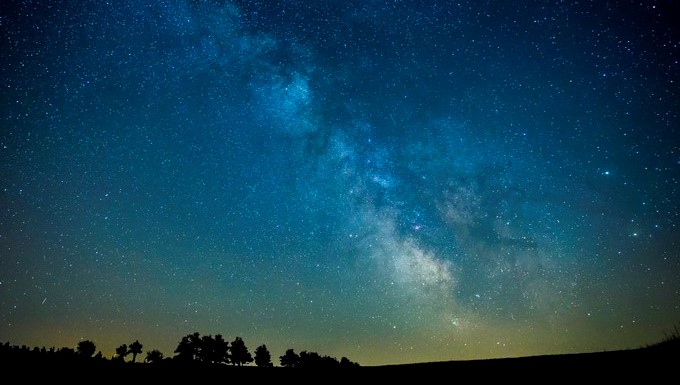
FOTOS: Una lluvia de estrellas Dracónidas invade el cielo

Usuarios desde diferentes partes del planeta publicaron fotografías del impactante fenómeno natural que se dio en el cielo. Se trata de la lluvia de estrellas Dracónidas que además de invadir el firmamento mundial, ahora se toma las redes sociales. Este evento se da cada año durante los primeros días del mes de octubre, cuando el […]

Publicado por: SoloDuque

Los astrónomos descubrieron por primera vez los objetos G en el monstruoso agujero negro de la Vía Láctea hace más de una década (G1 en 2004 y G2 en 2012) y pensaron que eran nubes de gas hasta que estos alcanzaron su punto más cercano al agujero negro supermasivo. EFE/Archivo
EFE/Archivo

Los astrónomos descubrieron por primera vez los objetos G en el monstruoso agujero negro de la Vía Láctea hace más de una década (G1 en 2004 y G2 en 2012) y pensaron que eran nubes de gas hasta que estos alcanzaron su punto más cercano al agujero negro supermasivo. EFE/Archivo

EFE/Archivo

Usuarios desde diferentes partes del planeta publicaron fotografías del impactante fenómeno natural que se dio en el cielo.

Se trata de la lluvia de estrellas Dracónidas que además de invadir el firmamento mundial, ahora se toma las redes sociales.

Este evento se da cada año durante los primeros días del mes de octubre, cuando el planeta pasa a través de los escombros que deja a su paso el cometa 21P/Giacobini-Zinner.

Hasta el 16 de este mes, se podrá ver la lluvia de estrellas en América del Norte, Europa y Asia.

Ver esta publicación en Instagram

Reposting from @ramzi.boudjeriou . . "Draconid Meteor Shower ☄️✨🌌 . These next few evenings – October 7 and 8, 2018 – the fiery mouth of the constellation Draco the Dragon will be spitting out meteors, also known as shooting stars. . Draconids are predicted to produce the greatest number of meteors [in] the evening – not after midnight – on October 7 or 8. This shower favors the Northern Hemisphere. Just be forewarned. Even at northerly latitudes, the Draconids are typically a very modest shower, perhaps offering only a handful of slow-moving meteors per hour. But watch out if the Dragon awakes – which it might this year, given that the parent body of this meteor shower Comet 21P/Giacobini-Zinner, is near perihelion – its closest point to the sun in its orbit! . The Draconid meteor shower produced awesome meteor displays in 1933 and 1946, with thousands of meteors per hour seen in those years. Seven years ago – in October 2011 – people around the globe saw an elevated number of Draconid meteors, despite a bright moon that night. European observers saw over 600 meteors per hour in 2011. . The Draconid meteor shower might offer an elevated number of meteors in 2018, too. To reiterate, that’s because the parent body of the Draconids, Comet 21P/Giacobini-Zinner, reaches perihelion – its closest point to the sun in its orbit – less than one month before the expected peak of the Draconid shower. But you never know for sure with the Draconids, so it’s worth watching out for on the evenings of October 7 and 8. Just know that meteor showers are notorious for defying predictions, either surpassing or falling shy of expectation. . The only way to know for sure is to try to watch the shower. . Text credit: Earthsky.org Image credit: Channone Arif . . #astronomy #sky #astrophotography #meteor #meteorshower #draconids #cosmos

Una publicación compartida por Graham Lau (@cosmobiologist) el

Author Signature
Sonia López

publicista, mercadotecnóloga y community manager, mi pasión es entrelazar estrategias creativas con el poder de la comunicación para ayudar a las personas y contar sus valiosas historias.


Anuncio
Minuto30 TV

El alcalde Fico Gutiérrez habla sobre la investigación que expone al gobierno con alias Calarcá

Comentarios

Valoramos la moderación y el respeto en nuestras conversaciones. Gracias por contribuir a un espacio positivo.